The Global Industry Alliance to Support Low Carbon Shipping (Low Carbon GIA) is a public-private partnership, established under the framework of IMO GreenVoyage2050, that aims to bring together maritime industry leaders to support an energy efficient and low carbon maritime transport system. Leading shipowners and operators, classification societies, engine and technology builders and suppliers, big data providers, oil companies and ports have joined hands under the Low Carbon GIA to collectively identify and develop innovative solutions to address common barriers to the uptake and implementation of energy efficiency technologies, operational best practices and alternative low- and zero-carbon fuels.
Activities of the Low Carbon GIA are collectively decided upon by its membership, and its work is organized into workstreams, each with a different focal area. The current workstreams of the Low Carbon GIA are:
The Low Carbon GIA is governed by the GIA Taskforce, comprised of representatives of the members, which serves as the strategic advisory body of the group and collectively takes decisions on what activities to undertake under each workstream. The Chair of the Low Carbon GIA TF is elected from the membership on a rotational basis, the current Chair of the GIA Taskforce is Mr. Tore Longva, DNV. Overall, the Low Carbon GIA is supported by its secretariat (the Project Coordination Unit of GreenVoyage2050).
Activities of the Low Carbon GIA are funded by the GIA Fund, which consists of annual membership fee contributions from each member. The specific allocation of funding to each workstream is decided by the GIA Taskforce.
The Low Carbon GIA was originally established in 2017 under the GEF-UNDP-IMO GloMEEP Project. Following the completion of the GloMEEP Project in December 2019, the Low Carbon GIA was re-established and continues to operate under the framework of IMO GreenVoyage2050.
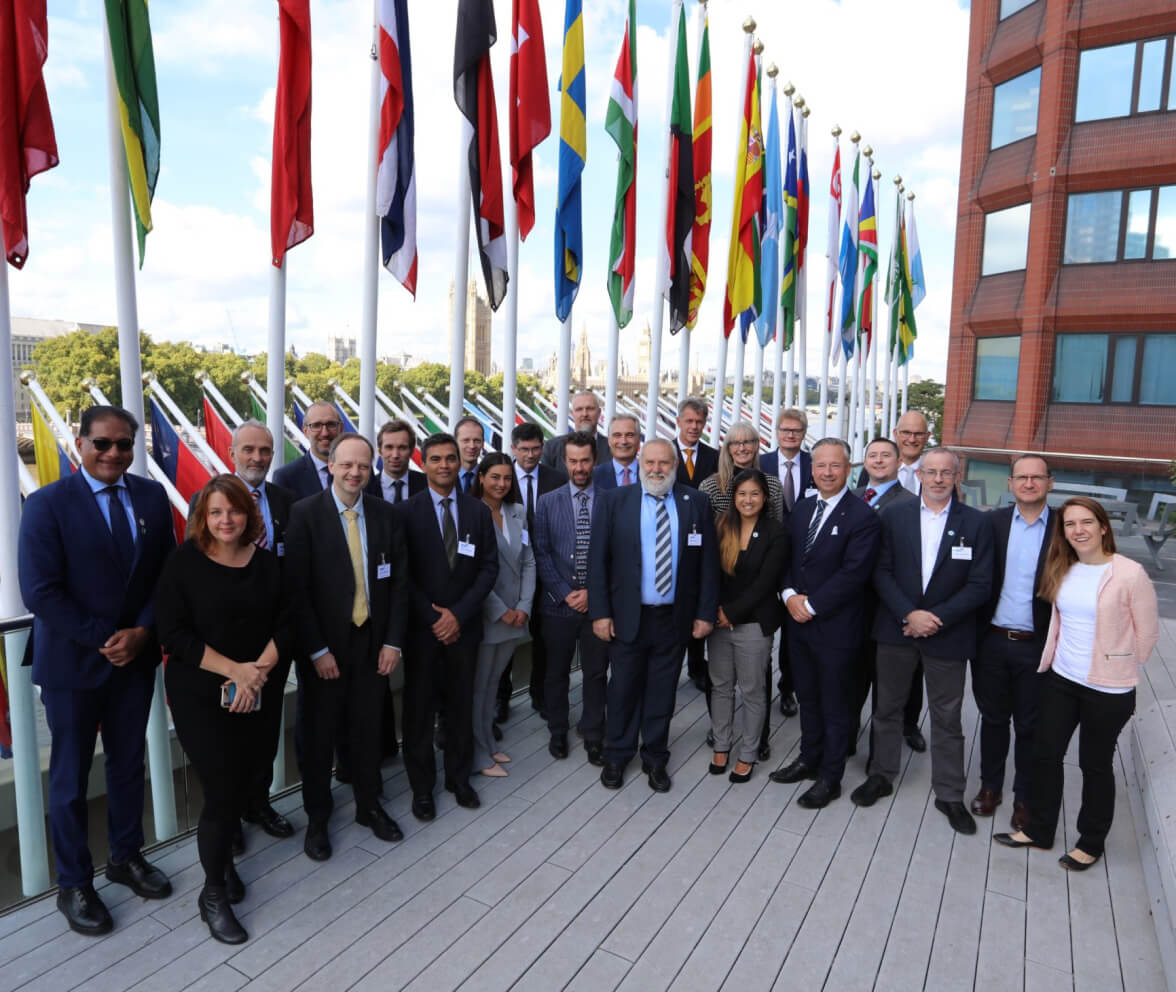
Activities of the Low Carbon GIA are collectively decided upon by its membership, and its work is organized into several workstreams, each with a different focal area and lead by a different Workstream Lead from among the GIA Members.
For any questions relating to the Low Carbon GIA workstreams and their activities please contact the GreenVoyage2050 PCU using the Contact Us form.
Workstream Lead: Ms. Lisa Gustin, Stena
The objective of this workstream is to support the uptake of energy efficiency technologies (EETs) and operational best practices on ships and in ports, and supports the implementation of resolution MEPC.366(79) which encourages voluntary cooperation between port and shipping sectors to contribute to reducing GHG emissions from ships.
The workstream aims to identify key barriers to the uptake of technologies and operational best practices, such as data transparency, and develops tools to contribute to removing and addressing those barriers.
This course provides a general introduction to how the maritime industry can reduce its environmental carbon footprint through practical measures to save energy on board.
This course, primarily aimed at seafarers, covers detailed practical measures that can be taken by the Engine and Deck department on board ships to save energy in their day-to-day operations.
A series of videos (between 5–20 mins) covering various aspects of the recent MARPOL Annex VI amendments, the Energy Efficiency Existing Ship Index and the Carbon Intensity Indicator.
This publication has been developed as a How-to-Guide to assess performance data from hull and propeller EETs, together with an accompanying practical tool (CGS) to support the assessment of EET performance claims by grading various analysis methodologies with an associated level of confidence.
Revision of the existing Energy Efficiency Technologies Information Portal and Appraisal Tool
Both tools, which aim to provide general information and indicate the potential impact of ship energy efficiency technologies, are being updated to reflect the most recent developments, information and regulations.
Energy Efficiency Technologies Roundtables: Wind Propulsion Technologies (WPTs)
A series of roundtables on WPTs are being organized and hosted by the Low Carbon GIA to gather experience from those who have installed wind-propulsion technologies, with a view to developing a practical guide for the application of these technologies.
This publication outlines several low-cost measures which port stakeholders can implement to facilitate emission reduction from ships. The publication describes how the measures work, as well as barriers and potential solutions to their implementation.
Based on the above-mentioned Guide, the ship-port interface measures portal has been developed, converting its contents into an online format, together with experience shared by ports on implementing the measures.
Based on the Just In Time Arrival Guide, developed and published under the GloMEEP Project, the workstream have developed an online portal, pooling together all the existing products and informational materials on Just In Time, including video animations, and materials developed by the International Taskforce on Port Call Optimization (ITPCO).
This study explores the potential emission reduction impact of JIT arrival within the global container shipping sector. The study uses AIS data to reconstruct containership voyages which took place in 2019 and analyzed the impact on CO2 emissions, should those voyages have been optimized to arrive JIT.
This flyer provides information on the carbon intensity indicator (CII) regulation which rates ships according to their operational carbon intensity and how it could potentially impact ports and terminals.
Practical step-by-step process for JIT implementation: Flyer
This activity includes the development of a step-by-step process, which is port agnostic, for the implementation of JIT, against which local port processes can be mapped.
Practical step-by-step process for JIT implementation: Video animation
Based on the above-mentioned process, a short video animation will be produced to provide an overview/explainer.
Workstream Lead: Mr. Robert Masse, MSC
The objective of this workstream is to identify and contribute to removing key barriers to the uptake of alternative fuels. The barriers can be broadly divided into four areas:
Undertaken by Ricardo Energy and Environment, this study mapped existing standards, regulations and calculation methods and tools, covering Well to Tank (WtT) and Tank to Wake (TtW) emissions. The study aimed to understand the coverage of this governance infrastructure and its applicability to marine fuels.
Roundtables on the certification of alternative marine fuels
As a follow up to the study above, the workstream organized two roundtable meetings exploring in more detail, the certification of alternative marine fuels. The first roundtable focused provided an introduction and overview to certification – the process, relevant schemes in general, while the second roundtable included representation from certification schemes such as RSB, ISCC and CertifHy.
Exploring the need for Book and Claim for scale-up of alternative fuels
Following on from the above-mentioned roundtable discussion, the workstream is focusing on the concept of Book and Claim, which is widely considered crucial for the scale up of alternative low and zero-carbon fuels, both in terms of uptake and use, but also new investments into the required infrastructure. Recognizing that there are knowledge gaps with respect to the subject matter, the activity is focused on awareness raising and will consist of a series of roundtable meetings and dialogues with stakeholders.
This mapping exercise provides an assessment of how alternative marine fuels and energy converters feature in key IMO Conventions and regulatory instruments and aims to inform and support IMO member States and the wider maritime sector in identifying and addressing potential regulatory challenges that could be encountered when considering the use of a particular alternative marine fuel.
The current membership of the Low Carbon GIA includes shipowners, technology providers, data providers, classification societies, and ports.