





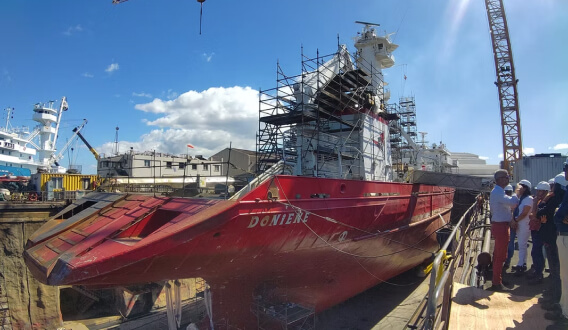

In general, optimization is the process of locating the best solution from a potentially infinite set of solutions. Some aspects of ship design can use optimization to produce more efficient hull shapes. In general, the owner has three options; accept standard design, modify existing design or develop a new design. The two last options involve optimization for specific service conditions. Modifications may focus on the forebody and stern shape design, while optimization for a new design may start from a main dimension study and include the whole vessel hull. Minimizing hull resistance will lead to lower fuel consumption.
While main particulars are generally well optimized across shipyards, there is significant variance in the degree of hull form and propeller optimization. A comprehensive study utilizing computational fluid dynamic (CFD) assessments would typically be required to fully optimize a hull form. Shipyards and design companies tend to optimize around the specified design draft and speed, while giving less attention to the efficiency at the ballast draft, partial load conditions, and a lower speed range. The hull form, particularly concerning bulb and transom areas, should be optimized with the vessel’s expected annual operational profile in mind.
Applicability and assumptions
Hull form optimization is only applicable for newbuilds. The CFD analysis typically include three or more iterations of lines refinement and should be carried out with multiple trims, drafts, and speeds.
Cost of implementation
Hull form optimization benefits all sister vessels. The cost of a full hull lines optimization utilizing CFD analysis will be in the range of $200,000 – $650,000 (USD).
Reduction potential
The reduction potential is dependent on vessel size, segment, operation profile and trading areas. Equally important is the extent and methodology used for hull lines optimization for the original design. A reduction of 4 – 8% on main engine fuel consumption is likely if the vessel is optimized for one speed and draft using traditional tank testing.
Typical total fuel consumption saving is estimated to be between 0.1 – 4%.
References
*This Information Portal is still under development and further images will be added. For suggestions and additional technologies to be included in the Information Portal, please use the GreenVoyage2050 Contact Form.
This Energy Efficiency Technologies Information Portal was developed in cooperation with DNV.
This webpage serves as an Information Portal for Energy Efficiency Technologies for Ships. IMO does not make any warranties or representations as to the accuracy or completeness of the information provided. View our disclaimer