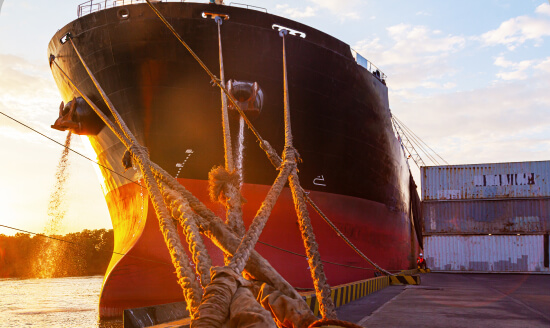



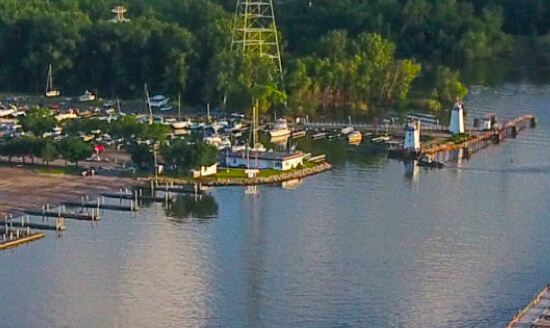
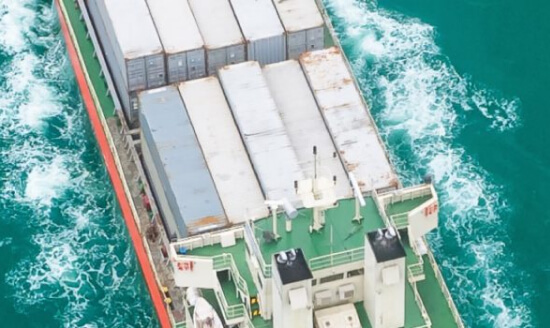
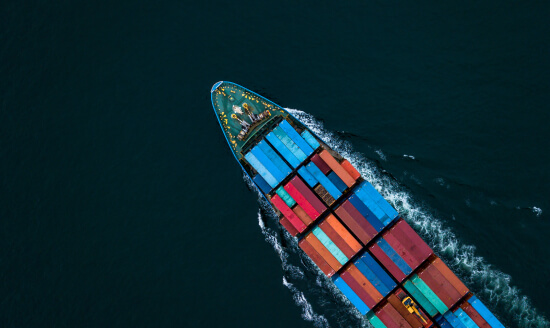


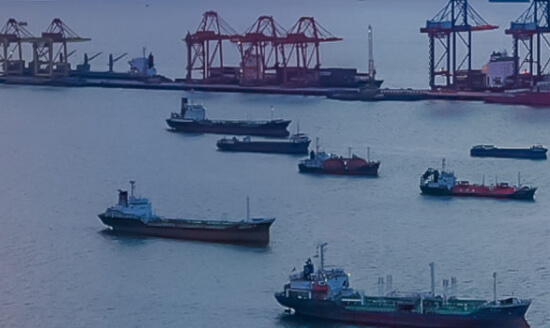

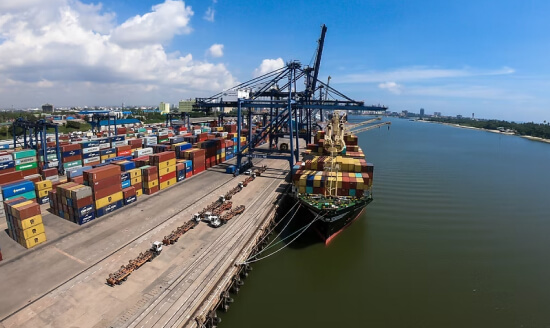
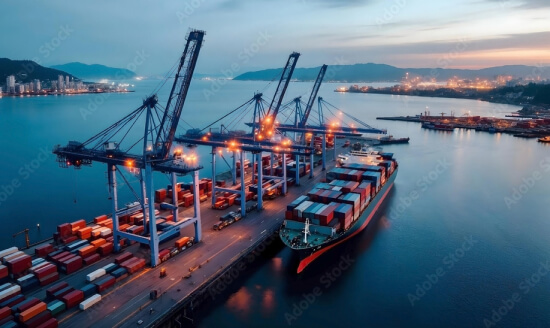
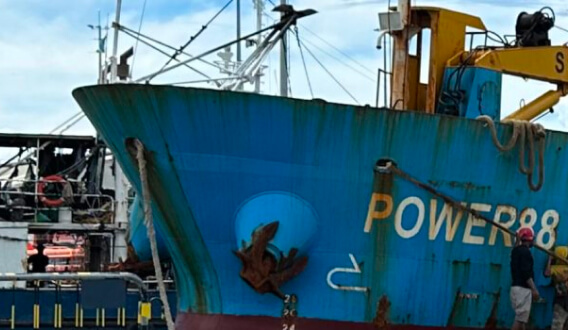
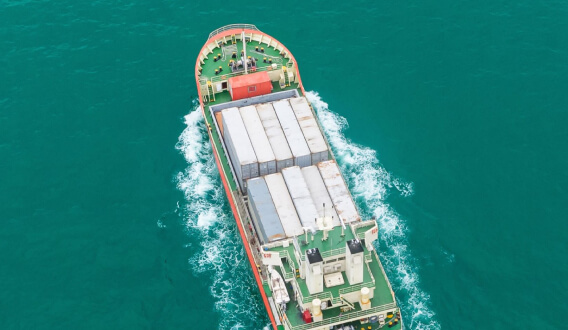
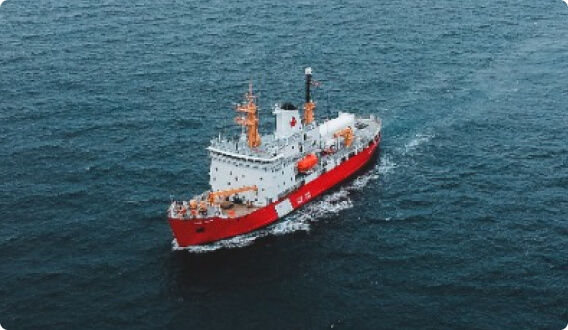
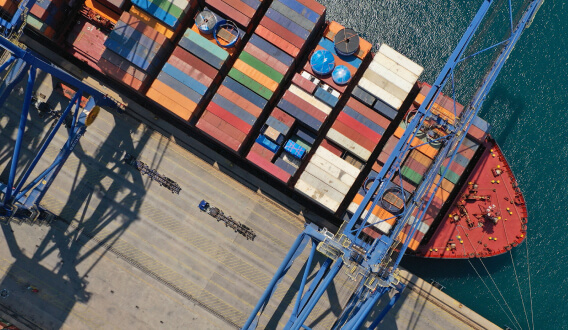
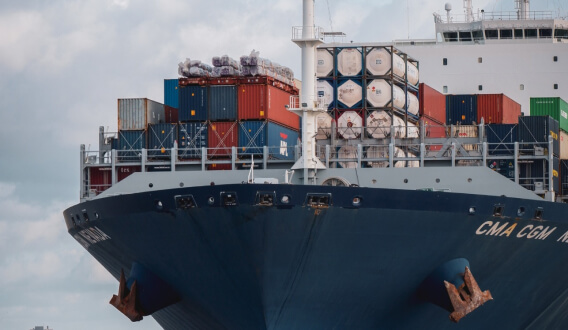
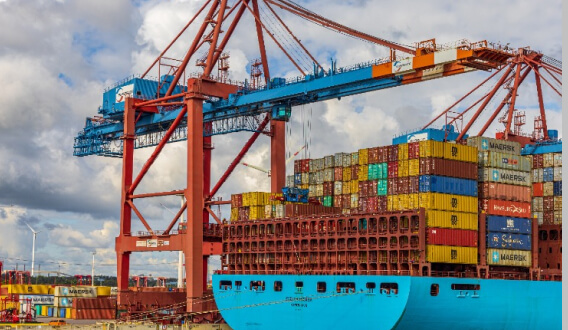
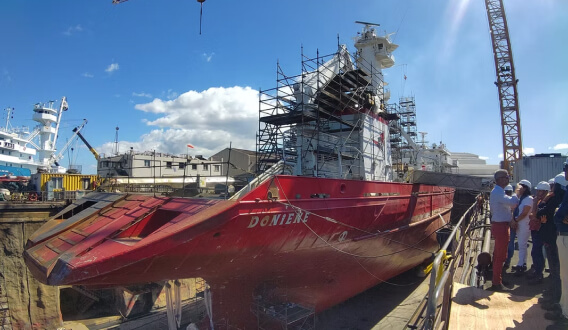

When a ship docks, it no longer needs energy for propulsion. Yet, ships may still be large consumers of energy as several of the ship functions are still operating. This includes ventilation/heating/cooling, pumps, control systems and cargo handling systems. Consequently, the generators are running also when in port, resulting in local noise and air emissions as well as global climate driving emission. Rather than letting the auxiliary generators onboard produce the power, this can come from onshore power.
Applicability and assumptions
Shore power can be installed for all types of vessels and for all ages with need for power in harbour and has been used for years especially for smaller vessels, but also some larger passenger vessels.
For smaller vessels to draw power from the land-based mains supply when docked, is not a new phenomenon. Shore power has been used extensively for many years for vessels with moderate power requirements; typically, less than 50-100 kW. These are vessels capable of making use of normal grid voltage and frequency and replace the energy from the generators with the shore power with only marginal investments.
For the larger vessels with higher power requirements (100 kW up to 10 – 15 MW) things gets a bit more complicated. To serve these vessels with shore power, dedicated, and relatively costly installations are required, both on land and onboard the vessels. This may include upgrading the grid capacity, frequency converters and complex high power connectors. Consequently, relatively few vessels and ports are made capable of making use of shore power, even though the environmental upsides are considerable. Still, cold ironing may be regarded as a mature technology which has been in regular use since the 1980’s.
Shore power may potentially eliminate the local noise and air pollution related to ship activity in a port. Depending on the energy source, it may also contribute positively to the climate driving effects of ship operation, but as an isolated initiative, it is generally not considered to be among the most cost effective climate initiatives.
On the land side, the high power cold ironing system consists of the following:
- High voltage grid to the port
- Frequency and voltage convertors/transformers
- Control panels and connection boxes
- Cable reel and connectors
The grid power solution and the frequency converters typically represent the costliest elements on the shore side. Depending on the availability of grid power and the power requirements, the cost of installing shore power on the shore side will vary considerably. There are upcoming legislative regulations from EU (The Alternative Fuels Infrastructure Regulation (AFIR)) that requires all TEN-T (Trans-European Transport Network) ports to install enough onshore power supply facilities to provide shore-side electricity for at least 90% of the port calls by seagoing passenger and container ships above 5,000 GT every year from 2030, expanding to all EU ports from 2035. The Fuel EU Maritime Regulation complements this requirement by introducing a zero emission at berth-mandate. This means that seagoing passenger and container ships above 5,000 GT must use onshore power supply (or alternative zero-emission technologies) from 2030 onwards to meet their electrical power needs when berthed for more than two hours in a TEN-T port, and all EU ports from 2035.
On the ship side the following will have to be installed:
- Transformer
- Power distribution system
- Control panel
- Frequency converter (optional for greater flexibility)
- Connectors and cable reel (optional for greater flexibility)
Table: Typical system specs for the different power requirements
| Power Capacity | Typical spec |
| <100kW | 230/400/440V – 50/60hz |
| 100 – 500kW | 400/440/690V – 50/60hz |
| 500-1000kW | 690V/6.6/11kV – 50/60hz |
| >1MW | 6.6/11kV – 50/60hz |
Table: Typical system requirements for different ship types and sizes
| Vessel types | <= 999 | 1000 – 4999 GT | 5000 – 9999 GT | 10000 – 24999 GT | 25000 – 49999 GT | 50000 – 99999 GT | >= 100000 GT |
| Oil tankers | 230/400/440V – 50/60hz | 400/440/690V – 50/60hz | 690V/6.6/11kVV – 50/60hz | 690V/6.6/11kVV – 50/60hz | 690V/6.6/11kVV – 50/60hz | 6.6/11kV – 50/60hz | 6.6/11kV – 50/60hz |
| Chemical/product tankers | 400/440/690V – 50/60hz | 400/440/690V – 50/60hz | 690V/6.6/11kVV – 50/60hz | 6.6/11kV – 50/60hz | 6.6/11kV – 50/60hz | ||
| Gas tankers | 400/440/690V – 50/60hz | 400/440/690V – 50/60hz | 6.6/11kV – 50/60hz | 6.6/11kV – 50/60hz | 6.6/11kV – 50/60hz | 6.6/11kV – 50/60hz | 6.6/11kV – 50/60hz |
| Bulk carriers | 230/400/440V – 50/60hz | 400/440/690V – 50/60hz | 400/440/690V – 50/60hz | 400/440/690V – 50/60hz | 400/440/690V – 50/60hz | 690V/6.6/11kVV – 50/60hz | |
| General cargo | 230/400/440V – 50/60hz | 400/440/690V – 50/60hz | 400/440/690V – 50/60hz | 400/440/690V – 50/60hz | 690V/6.6/11kVV – 50/60hz | ||
| Container vessels | 400/440/690V – 50/60hz | 400/440/690V – 50/60hz | 690V/6.6/11kVV – 50/60hz | 6.6/11kV – 50/60hz | 6.6/11kV – 50/60hz | 6.6/11kV – 50/60hz | |
| Ro Ro vessels | 230/400/440V – 50/60hz | 400/440/690V – 50/60hz | 400/440/690V – 50/60hz | 690V/6.6/11kVV – 50/60hz | 690V/6.6/11kVV – 50/60hz | 6.6/11kV – 50/60hz | |
| Passengers vessels | 230/400/440V – 50/60hz | 400/440/690V – 50/60hz | 400/440/690V – 50/60hz | 690V/6.6/11kVV – 50/60hz | 6.6/11kV – 50/60hz | 6.6/11kV – 50/60hz | 6.6/11kV – 50/60hz |
Cost of implementation
The cost of adapting a vessel for shore connection depends on the plant design and the possibility of varying the voltage and frequency range when needed. Further, it is important to consider that the costs are only for the vessel, not for the implementation at the port side.
Depending on the power requirement the cost of implementation will be in the range of $50,000 – $2,000,000 (USD).
Reduction potential
The reduction potential is 50 – 100% in port for the electrical motors onboard. Experience from recent years indicate that a potential annual saving in fuel consumption is between 0.5% and 15%. This is for vessels where shore power completely replaces the need for running auxiliary generators when in port. Note that the saving potential will be highly dependent on vessel segment, operational profiles, availability in port, etc.
References
- Independent non-profit website established by the World Ports Climate Initiative (WPCI) (2024)
- Commission Recommendation (2006) The Promotion of shore-side electricity for use by ships at berth in community ports
- ISO (2024) Electrical installations in ships. The ISO is a non-governmental organization that forms a bridge between the public and the private sectors. The ISO in co-operation with the IEC and IEEE is currently preparing a standard for High Voltage Shore Connection systems
- Vaishnav, P., et al. (2016) Shore Power for Vessels Calling at U.S. Ports: Benefits and Costs
- Thalis, S. (2019) Prospects of cold ironing as an emissions reduction option
- Qi, X., et al. (2020) Shore power management for maritime transportation: Status and perspectives
- EU Alternative Fuels infrastructure, Article 9
- EU Use of renewable and low-carbon fuels in maritime transport, Article 6
*This Information Portal is still under development and further images will be added. For suggestions and additional technologies to be included in the Information Portal, please use the GreenVoyage2050 Contact Form.
This Energy Efficiency Technologies Information Portal was developed in cooperation with DNV.
This webpage serves as an Information Portal for Energy Efficiency Technologies for Ships. IMO does not make any warranties or representations as to the accuracy or completeness of the information provided. View our disclaimer